Football Betting Guide: Odds, Spreads & Strategies
 Available in US
Football betting has evolved from back-alley bookmakers into a multi-billion-dollar industry that now operates legally in most US states. Whether you want to add excitement to Sunday afternoons or approach sports wagering with analytical rigor, understanding the fundamentals separates casual bettors from those who actually know what they are doing. This guide strips away the marketing fluff you will find on sportsbook sites and delivers practical knowledge about how football betting actually works.
The American football betting market encompasses the NFL, college football, the CFL, and even the USFL, though the NFL dominates the conversation. In the 2025-2026 season alone, Americans legally wagered over fifty billion dollars on professional and college football games. That money did not flow from informed decisions alone. Much of it came from bettors who did not understand spread mechanics, chased parlays without comprehension of the math, or treated gambling as an investment strategy rather than entertainment.
This guide approaches football betting differently. We cover odds formats and what they actually mean for your wallet, break down every major bet type with concrete examples, explain why certain strategies work while others drain bankrolls, and address the critical differences between NFL and college football markets. The goal is not to turn you into a professional handicapper. Instead, you will walk away understanding enough to make informed decisions, recognize value when it appears, and avoid the costly mistakes that catch beginners every season.
One note before we continue: gambling involves real financial risk. Everything discussed here assumes you are betting within your means, in a jurisdiction where sports betting is legal, and treating wagering as entertainment with a defined budget. The house always has a mathematical edge, and no strategy guarantees profit. Now, let us get into the mechanics.
Table of Contents
- Understanding Football Betting Basics
- How Football Betting Odds Work
- Types of Football Bets Explained
- How to Place Your First Football Bet
- Football Betting Strategies That Work
- NFL vs. College Football Betting
- Responsible Football Betting
- Glossary of Football Betting Terms
- Frequently Asked Questions
Understanding Football Betting Basics
What is Football Betting?
Football betting refers to wagering money on outcomes related to American football games. At its core, you are predicting something: which team wins, how many points get scored, whether a quarterback throws for a certain number of yards, or countless other possibilities. If your prediction proves correct, you win money from the sportsbook. If wrong, you lose your stake. Simple in concept, though the variations and strategic depth run considerably deeper.
Sportsbooks function as intermediaries. They set lines and odds designed to attract roughly equal action on both sides of a wager, collecting a commission known as vigorish or juice on losing bets. Modern sportsbooks employ teams of traders, algorithms, and data analysts to set accurate lines. Their goal is not to predict outcomes perfectly but to manage risk by balancing their books. When you bet, you are essentially competing against the market wisdom embedded in those lines, plus overcoming the house edge built into every wager.
The scope of football betting extends beyond the NFL. College football offers hundreds of games each Saturday during fall, the Canadian Football League runs a summer schedule, and various spring leagues have emerged with betting markets. The NFL remains the primary focus for most American bettors due to its cultural prominence, extensive media coverage, and the depth of statistical information available for analysis.
Where Can You Bet on Football Legally?
The legal landscape for sports betting in America transformed after the Supreme Court overturned PASPA in 2018. As of early 2026, thirty-nine states plus Washington D.C. have legalized sports betting in some form, with the majority offering online and mobile wagering. States like New Jersey, Pennsylvania, Illinois, Michigan, and Arizona have mature markets with multiple competing sportsbooks. Others restrict betting to retail locations at casinos or racetracks.
Licensed sportsbooks operate under state regulatory frameworks that require consumer protections, responsible gambling tools, and financial standards. The major operators include DraftKings, FanDuel, BetMGM, Caesars, and bet365, each offering mobile apps and web platforms where you can place bets. These companies compete aggressively for customers through promotional offers, though the core product is largely similar across platforms.
Using licensed sportsbooks matters for several practical reasons. Your funds receive protection under state regulations, disputes have formal resolution processes, and you gain access to responsible gambling tools like deposit limits and self-exclusion. Offshore books operating without US licenses offer none of these protections. They may refuse payouts, disappear overnight, or expose your personal data. The legal market is sufficiently competitive that no compelling reason exists to risk unregulated options.
How Football Betting Odds Work
American Odds Explained
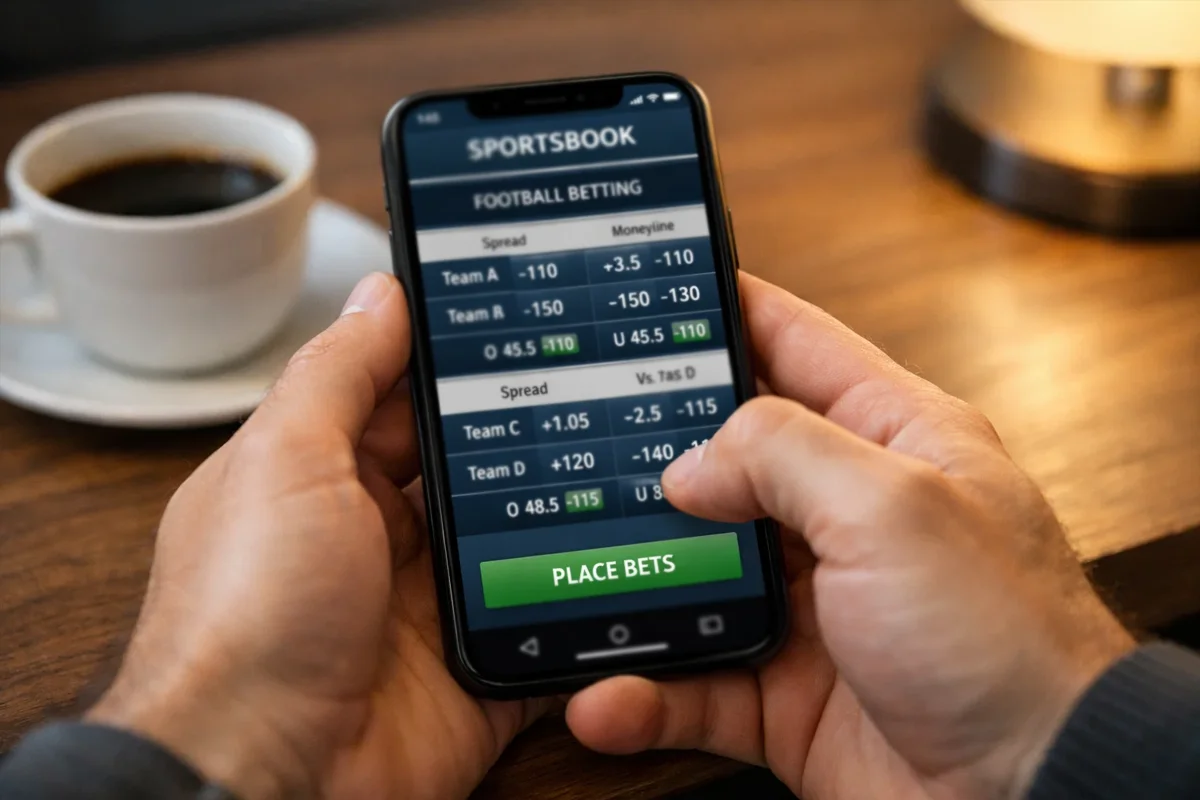
American odds use plus and minus signs to indicate underdogs and favorites while simultaneously communicating payout information. This format dominates US sportsbooks and requires understanding two scenarios depending on whether you see a positive or negative number.
Negative odds indicate the favorite and show how much you must wager to win one hundred dollars. If the Kansas City Chiefs are listed at -150 against the Las Vegas Raiders, you need to bet $150 to profit $100 if the Chiefs win. Your total return would be $250, comprising your original $150 stake plus $100 in winnings. The larger the negative number, the heavier the favorite. A team at -300 requires a $300 bet to win $100.
Positive odds indicate the underdog and show how much you profit on a $100 wager. If those Raiders are listed at +130, a $100 bet returns $130 in profit if Las Vegas wins, plus your original stake for a total return of $230. Larger positive numbers mean bigger underdogs and higher potential payouts. A +500 underdog returns $500 profit on every $100 wagered.
These relationships scale linearly. You do not need to bet exactly $100. A $50 bet on a -150 favorite wins $33.33 in profit. A $20 bet on a +130 underdog wins $26 in profit. Sportsbook apps calculate exact payouts automatically, but understanding the underlying math helps you evaluate whether odds offer genuine value.
Decimal and Fractional Odds
While American odds dominate domestically, international sportsbooks and betting exchanges often display decimal or fractional formats. Understanding all three allows you to compare odds across platforms and recognize the same price presented differently.
Decimal odds represent your total return per dollar wagered, including the original stake. Odds of 2.30 mean a $100 bet returns $230 total, which equals $130 profit. This format is popular in Europe, Canada, and Australia. Converting from American to decimal follows straightforward formulas: for positive American odds, divide by 100 and add 1; for negative odds, divide 100 by the absolute value and add 1. A +130 line becomes 2.30 in decimal format. A -150 line converts to approximately 1.67.
Fractional odds, traditional in the United Kingdom, express profit relative to stake as a ratio. Odds of 13/10 mean you win $13 for every $10 wagered. Converting fractional to decimal simply involves dividing the first number by the second and adding 1, so 13/10 becomes 2.30. Most American bettors rarely encounter fractional odds outside of specialized markets like horse racing futures.
Understanding Implied Probability
Every betting line contains an implied probability expressing how likely the sportsbook believes an outcome is, adjusted for their profit margin. Converting odds to probability helps you identify potential value by comparing the bookmaker's assessment against your own analysis.
For negative American odds, the formula is: absolute value divided by absolute value plus 100. A -150 favorite implies 150 divided by 250, equaling 60 percent probability. For positive American odds: 100 divided by the odds plus 100. A +130 underdog implies 100 divided by 230, equaling approximately 43.5 percent.
Notice that -150 and +130 from our example yield implied probabilities totaling 103.5 percent rather than 100 percent. That excess represents the vigorish, the sportsbook's built-in margin. Standard juice runs around 10 percent on spread and total bets, meaning you typically see -110 on both sides. At -110, each side implies 52.4 percent probability, totaling 104.8 percent. The difference from 100 percent is the house edge.
Recognizing implied probability enables value betting. If you believe the Raiders actually have a 50 percent chance to win outright, a +130 moneyline offers positive expected value since it implies only 43.5 percent. Over enough similar situations, betting on outcomes where your assessed probability exceeds the implied probability should generate long-term profit. This is the fundamental concept separating recreational betting from analytical approaches.
Types of Football Bets Explained
Point Spread Betting
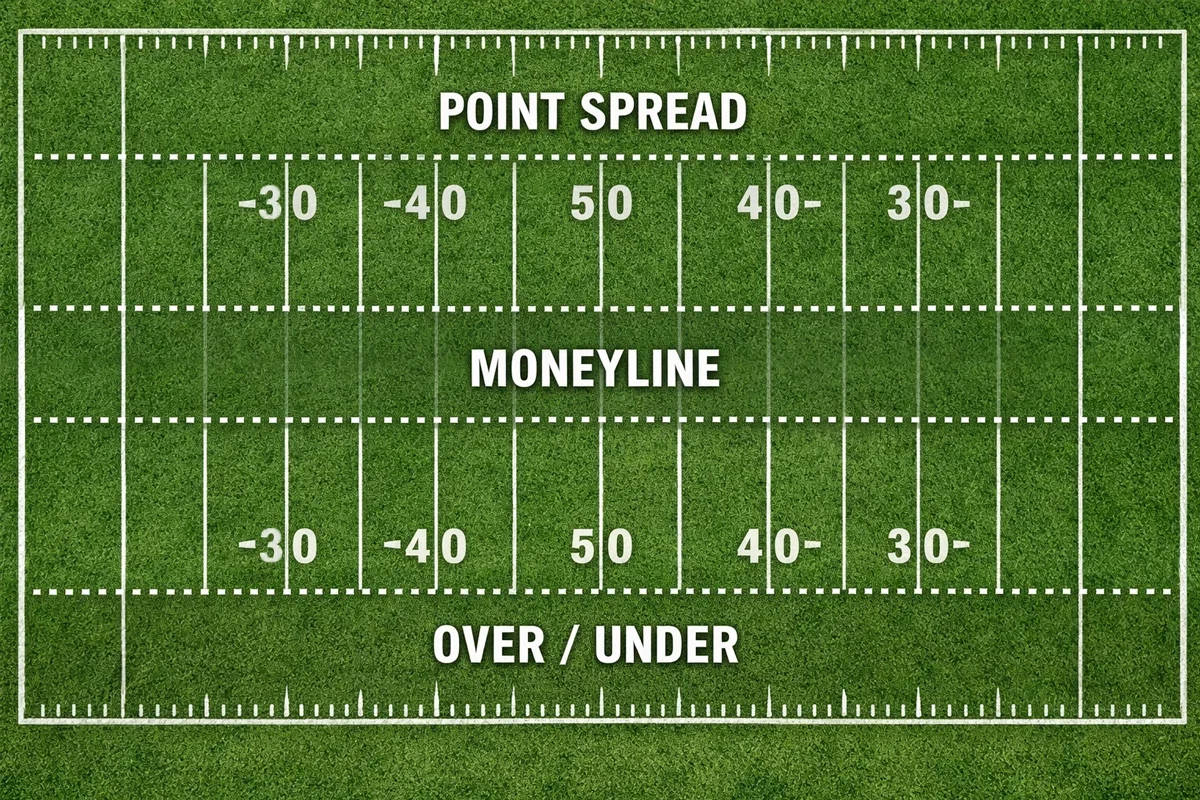
Spread betting levels the playing field between mismatched teams by assigning a handicap. The favorite must win by more than the spread to cover, while the underdog can lose by less than the spread and still win the bet. This creates roughly 50/50 propositions on games with clear talent disparities.
Consider a Sunday matchup where the Buffalo Bills host the New England Patriots. If Buffalo is favored by 7 points, written as Bills -7, they must win by 8 or more points for a spread bet on them to pay out. A Buffalo victory by exactly 7 points results in a push, returning all stakes. Meanwhile, Patriots +7 wins if New England loses by 6 or fewer, or wins outright. The spread transforms a likely Buffalo victory into a competitive betting proposition.
Certain numbers matter more in football spreads due to common scoring increments. Three and seven are the most significant because field goals score 3 points and touchdowns with extra points score 7. Games decided by exactly 3 points happen frequently, roughly 15 percent of NFL contests historically. Games decided by exactly 7 points occur around 9 percent of the time. Spreads landing on these key numbers see heavy action, and half-point movements off 3 or 7 carry outsized importance.
Half-point spreads eliminate push possibilities. A spread of -7.5 requires an 8-point victory minimum, while +7.5 covers with a 7-point loss. Sportsbooks use half-points to ensure decisive outcomes on popular numbers. Some books allow purchasing points, paying extra juice to move the spread in your favor, though this rarely offers positive expected value outside specific key-number situations.
Moneyline Bets
Moneyline betting strips away the complexity of spreads. You simply pick which team wins the game. No handicaps, no point margins, just straight victory or defeat. The trade-off appears in the odds, which adjust to reflect each team's winning probability.
Returning to our Bills-Patriots example, Buffalo might be -300 on the moneyline alongside that 7-point spread, while New England sits at +240. Betting $300 on Buffalo to win outright returns $100 profit, while $100 on New England returns $240 if they pull the upset. The spread essentially prices in approximately a touchdown advantage while the moneyline prices the probability of outright victory regardless of margin.
Moneyline bets make sense in specific situations. Betting underdogs on the moneyline captures full value from any victory rather than just covering a spread. If you believe the Patriots might win outright, +240 pays better than +7 at -110. Conversely, moneyline favorites often offer poor value because the risk-reward ratio inverts. Laying -300 risks $300 to win $100, requiring wins 75 percent of the time just to break even against standard juice.
Professional bettors often convert spread edges into moneyline plays on underdogs or avoid moneyline favorites entirely unless the price seems misstated. For casual bettors, spreads generally offer more balanced risk-reward profiles while moneylines make sense when genuinely expecting an underdog victory.
Totals Betting
Totals or over-under bets focus on combined scoring rather than which team wins. Sportsbooks set a projected total, and bettors wager whether actual combined points finish higher or lower than that number. A typical NFL total might be 47.5 points, with standard -110 juice on both over and under.
Totals betting appeals to those who prefer analyzing matchups without picking sides. You might expect a high-scoring affair when two explosive offenses meet weak secondaries, or anticipate a defensive struggle in a divisional rivalry with inclement weather forecasted. The game's outcome becomes irrelevant as long as the combined score lands on your side of the number.
Weather impacts totals significantly. Snow, heavy rain, and strong winds depress scoring by disrupting passing games and kicking accuracy. Temperature extremes can affect ball handling and player performance. Sharp bettors monitor weather forecasts closely as game day approaches, since totals often adjust based on conditions. Indoor stadiums eliminate weather factors, generally leading to higher totals for domes compared to outdoor venues.
Pace and offensive philosophy also drive totals. Teams that run extensive rushing attacks consume clock and limit possessions. Pass-heavy offenses create more plays and scoring opportunities. Historical trends, injury situations affecting key offensive or defensive players, and even referee assignments can influence how games unfold relative to posted totals.
Prop Bets
Proposition bets focus on specific occurrences within games rather than final outcomes. Player props project individual statistical performances while game props address team or situational outcomes unrelated to the final score.
Player props cover nearly every measurable statistic. You might bet on a quarterback's passing yards, a running back's rushing attempts, a receiver's receptions, or a defender's tackles. Lines function like totals: Patrick Mahomes passing yards over/under 285.5 with standard juice on each side. If Mahomes throws for 290 yards, the over wins regardless of whether the Chiefs win or lose.
Game props include scenarios like first team to score, whether either team scores in the final two minutes of the first half, exact winning margin ranges, or whether the game goes to overtime. Some props venture into novelty territory, especially around major events. Super Bowl props famously include questions about the coin toss result, national anthem length, and Gatorade shower color.
Prop markets often display more inefficiency than traditional sides and totals because sportsbooks dedicate fewer resources to setting precise lines. Bettors who specialize in player analysis can sometimes identify consistent edges in prop markets that mainstream bettors overlook. However, prop limits are typically lower than spread and total bets, constraining how much action sportsbooks accept.
Parlays and Teasers
Parlays combine multiple bets into a single wager where all selections must win for any payout. The appeal lies in compounding odds for larger potential returns. A two-team parlay at standard -110 on each leg pays roughly 2.6 to 1 rather than the approximately 0.9 to 1 you would receive betting each separately. A three-team parlay pushes toward 6 to 1.
The mathematics work against parlay bettors systematically. Each leg multiplies your required hit rate while sportsbooks calculate payouts slightly below true odds. A two-team parlay requires winning approximately 52.4 percent on each selection to break even on standard juice, which compounds to requiring both to hit about 27.5 percent of the time. True 50/50 propositions would hit jointly only 25 percent. The gap widens with each additional leg.
Teasers offer a football-specific variant where you move the spread in your favor on multiple selections in exchange for reduced payouts. A standard six-point teaser shifts each spread by six points. That Bills -7 becomes Bills -1, needing only a two-point victory. Teasers pay less than standard parlays but succeed more often. The optimal teaser strategy involves moving spreads through key numbers, particularly crossing 3 and 7 in either direction.
Professional bettors generally avoid parlays on random selections because the math guarantees long-term losses. However, correlated parlays where outcomes link logically can offer value, and teasers through key numbers have been documented as occasionally positive-expected-value plays under specific conditions.
Futures Bets
Futures markets address season-long outcomes rather than individual games. You can bet on Super Bowl winners before the season, division champions, conference winners, regular season win totals, and individual awards like Most Valuable Player.
The appeal of futures involves both potential payouts and engagement. Backing a team at +2500 to win the Super Bowl returns $2,500 profit on $100 if they capture the championship. That bet remains active throughout the season, adding interest to every game involving your selection. Futures also allow betting on outcomes before public perception adjusts, potentially capturing value on teams you believe the market undervalues.
The drawbacks center on capital commitment and opportunity cost. Money wagered on futures remains locked until resolution, potentially months later. You cannot reinvest profits or cut losses on unfavorable outcomes. Furthermore, sportsbook edges on futures markets typically exceed those on game lines. While standard game spreads carry around 4.5 percent hold, futures markets often build in 15-25 percent margins.
Timing matters significantly for futures. Early-season odds reflect preseason assessments while late-season odds incorporate actual performance. Betting before the season captures maximum potential value but requires projecting roster composition, injury luck, and schedule difficulty. Betting during the season allows observing actual team quality but faces compressed odds on contenders.
Live Betting
In-play or live betting allows wagering during games with lines updating continuously based on game flow. If the Bills score early and take a 14-0 lead, the spread adjusts in real time, potentially offering New England at +14 instead of the original +7. Totals shift based on pace and scoring. Moneylines react to each meaningful play.
Live betting creates opportunities for bettors who process game information quickly or identify discrepancies between their assessment and the market's reaction. If you believe a 14-0 deficit against a particular opponent is less meaningful than the market implies, that adjusted spread might offer value. Conversely, if game flow suggests the blowout will continue, taking the new favorite's spread might be preferable to waiting.
The challenges involve speed, discipline, and the house edge. Sportsbooks use sophisticated models to adjust lines within seconds of significant plays. Individual bettors rarely possess informational advantages in real time. Additionally, juice on live bets sometimes exceeds standard rates, and the pace encourages impulsive wagering. Live betting works best as a supplement to pregame analysis rather than a primary strategy, and only for those who can maintain discipline while watching emotional live events.
How to Place Your First Football Bet

Choosing a Licensed Sportsbook
Selecting a sportsbook involves evaluating several practical factors beyond promotional offers. Licensing matters most: verify that the operator holds a valid license from your state's gaming commission, which you can typically confirm through the commission's website or the sportsbook's legal disclaimers.
Beyond legality, consider the user experience. Mobile apps dominate modern sports betting, so download candidates and navigate their interfaces before depositing. Check whether they offer the bet types and sports you care about, since coverage varies by operator. Examine their odds relative to competitors because even small differences compound over time. A sportsbook consistently offering -108 instead of -110 returns meaningful savings to active bettors.
Banking options also differ between platforms. Most accept major credit cards, debit cards, and bank transfers. Some offer PayPal, Venmo, or dedicated payment networks. Withdrawal speeds range from same-day to over a week depending on method and operator. Reading user reviews about payout reliability helps avoid frustration later.
Creating Your Account and Making a Deposit
Registration follows standard online account creation patterns. You provide personal information including name, address, date of birth, email, and phone number. Sportsbooks verify your identity to comply with regulations and prevent fraud. You may need to upload identification documents like a driver's license or passport.
Most platforms offer welcome bonuses to new depositors. These commonly include deposit matches, where the sportsbook adds bonus funds equal to a percentage of your first deposit, or bet credits that refund losses on initial wagers. Read the terms carefully because wagering requirements often govern how you can use and withdraw bonus funds. A $200 deposit match with 10x playthrough requires $2,000 in total wagers before withdrawing bonus-derived winnings.
Set a deposit amount reflecting your entertainment budget for sports betting. Treat this money as an expense for entertainment rather than an investment expecting returns. Many sportsbooks allow setting deposit limits, loss limits, and time limits as responsible gambling tools. Configuring these during account setup creates friction against impulsive decisions later.
Navigating the Interface and Placing Your Bet
Sportsbook apps organize sports and leagues hierarchically. You will find NFL and college football under dedicated sections, typically with the current week's games prominently displayed. Tapping a game reveals available markets including spreads, totals, moneylines, and props.
Building a bet involves selecting your desired outcome, which adds it to your bet slip. The slip shows your selection, the odds, and a field for entering your stake. Many apps display potential winnings based on your stake amount. Review everything carefully before confirming because most platforms finalize bets immediately upon submission without confirmation dialogs.
Start with single bets rather than parlays while learning. Betting small amounts, even the platform minimum, allows experiencing the mechanics without significant financial exposure. Track your bets in a simple spreadsheet recording the date, game, bet type, odds, stake, and outcome. This habit builds awareness of your betting patterns and results over time.
Football Betting Strategies That Work
Bankroll Management
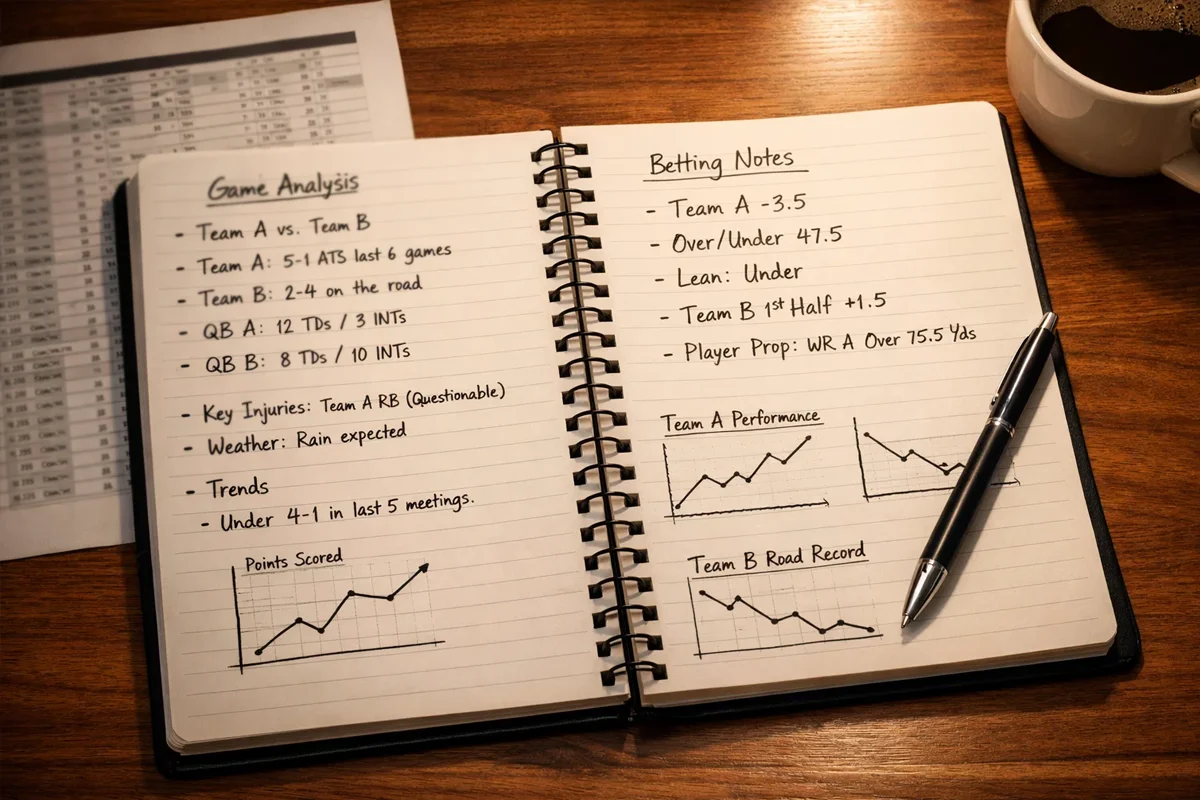
Sustainable betting requires treating your bankroll as a finite resource governed by systematic rules. Determine an amount you can afford to lose entirely without affecting your financial obligations or emotional well-being. This becomes your betting bankroll, held separate from money needed for bills, savings, or other priorities.
The standard approach involves betting a consistent percentage of your bankroll on each wager, typically between one and five percent. If your bankroll is $500 and you bet two percent per game, each wager is $10. This flat-betting approach ensures that losing streaks cannot eliminate your bankroll quickly while allowing it to grow during winning periods. Adjusting bet sizes based on confidence levels within this range is reasonable, but avoid dramatic swings.
Never chase losses by increasing bet sizes to recover previous losses quickly. Variance in gambling produces streaks that feel non-random but reflect normal probability distributions. A ten-bet losing streak on 50-50 propositions happens to roughly one in a thousand bettors. Chasing transforms manageable losing periods into catastrophic bankroll destruction. Accept that losses are part of the process and trust your pre-established unit sizing.
Line Shopping
Maintaining accounts at multiple sportsbooks enables line shopping, comparing odds across platforms for each bet and taking the best available number. This practice costs nothing but time and generates the closest thing to a free edge in sports betting.
The impact seems minor on individual bets but compounds significantly. Consider a season of 200 spread bets where line shopping improves your average odds from -110 to -105. On $100 bets, this saves approximately $500 annually in juice alone. Over years of betting, these savings represent the difference between slow bankroll erosion and breaking even or slight profitability.
Line shopping matters most around key numbers and closing times. Sportsbooks disagree on exact lines, sometimes offering the same side at meaningfully different prices. As game time approaches, lines converge but temporary discrepancies create windows for value. Apps and websites that aggregate odds across books simplify comparison, though nothing replaces checking your preferred platforms directly.
Research and Analysis
Informed betting requires analyzing relevant information rather than relying on gut feelings or media narratives. Focus on factors that actually predict game outcomes: efficiency metrics, injury situations, situational context, and line movement patterns.
Modern football analytics offers accessible metrics measuring offensive and defensive quality. Points per drive, success rate, expected points added per play, and similar statistics outperform simple win-loss records for predicting future performance. Websites dedicated to advanced football statistics provide these numbers freely. Spending time understanding what these metrics capture and which correlate with betting outcomes improves your assessment ability.
Injury information requires careful interpretation. The official NFL injury report categorizes players as questionable, doubtful, or out, but these designations do not always reflect actual expected participation. Following beat reporters who cover specific teams often yields better insight into player statuses than official listings. Key positions like quarterback, left tackle, and shutdown cornerback affect game dynamics more than depth positions, so weight injuries accordingly.
Situational factors include rest advantages, travel schedules, and motivational contexts. Teams playing on short rest face documented performance declines. Cross-country travel to unfavorable time zones introduces additional fatigue. Rivalry games and elimination scenarios create emotional edges that sometimes manifest in performance. None of these factors guarantee outcomes, but incorporating them into analysis improves accuracy marginally.
Avoiding Common Mistakes
The most destructive betting mistakes stem from psychological biases rather than informational deficits. Recognizing these patterns in yourself enables conscious correction.
Betting on your favorite team introduces emotional bias that clouds judgment. You likely overestimate their chances based on fandom rather than analysis, ignore negative information, and experience disproportionate emotional reactions to outcomes. Many successful bettors simply refuse to bet on games involving their preferred teams, eliminating the conflict entirely.
Recency bias causes overweighting recent results relative to season-long performance. A team that lost badly last week seems worse than their overall quality, while a team coming off a blowout victory seems invincible. Markets often overreact to recent results, sometimes creating value on teams with single poor performances against good opponents. Evaluating season-long metrics rather than last-week highlights counteracts this tendency.
Confirmation bias leads to seeking information supporting your existing position while dismissing contradictory evidence. Once you decide to bet on a side, your brain filters incoming data to justify that decision. Combat this by actively looking for reasons your bet might lose. If you cannot articulate a plausible losing scenario, you probably have not analyzed the game thoroughly.
NFL vs. College Football Betting
Market Structure and Efficiency
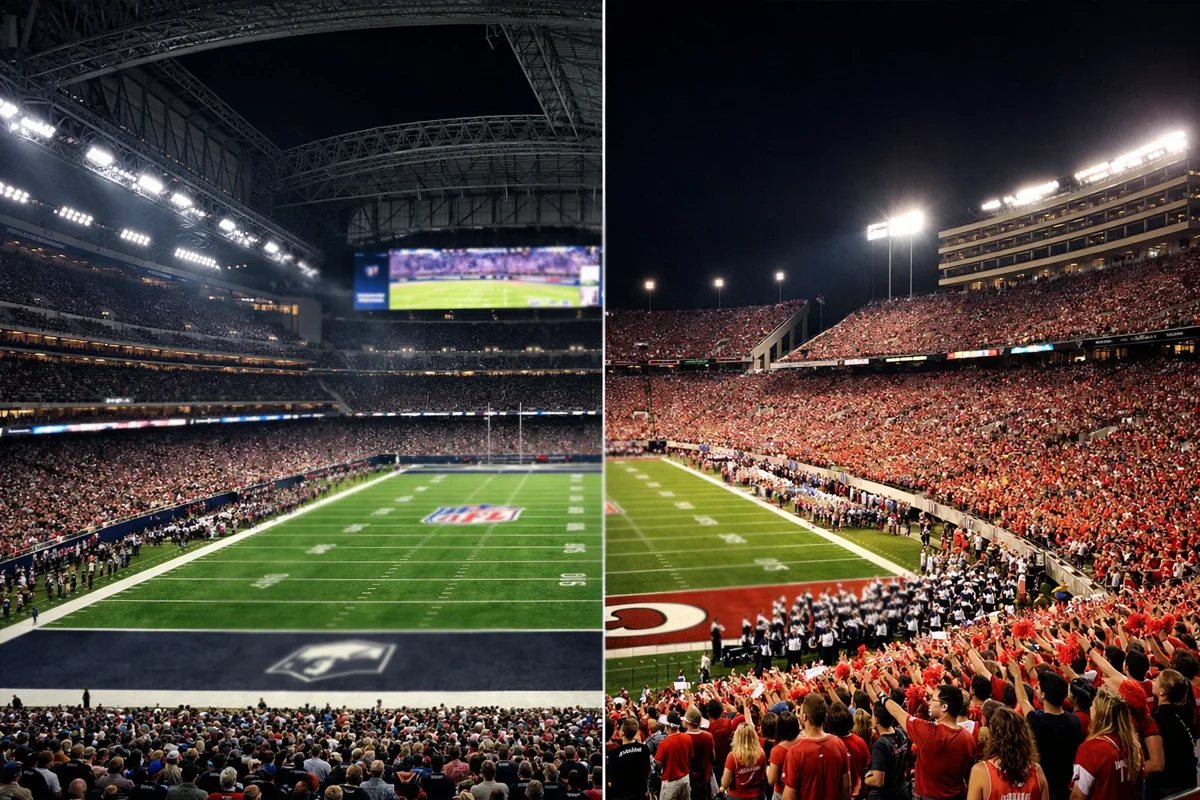
The NFL and college football represent fundamentally different betting markets despite both involving American football. Understanding these differences helps calibrate expectations and adjust strategies appropriately.
The NFL features 32 teams playing a 17-game regular season with extensive media coverage, detailed injury reporting, and abundant statistical data. Sharp bettors, professional syndicates, and sophisticated models focus intensely on NFL lines. This competition produces highly efficient markets where finding consistent value requires significant skill and effort. The lines reflect close approximations of true probabilities, adjusted for house edge.
College football involves over 130 FBS teams playing roughly 800 games during the regular season. Many matchups between smaller programs receive minimal coverage, limited broadcast exposure, and sparse analytical attention. Sportsbooks cannot dedicate equal resources to setting lines for every game. This creates opportunities for bettors who specialize in specific conferences or focus on under-followed matchups where informational edges exist.
The practical implication is that NFL betting requires competing against sharper competition for smaller edges, while college football offers more potential inefficiencies to exploit but demands broader knowledge of a much larger landscape. Neither is inherently easier or more profitable; they simply require different approaches.
Spread Differences and Key Numbers
Point spreads in NFL games rarely exceed 14 points and typically cluster between pick-em games and 10-point favorites. The league's competitive structure, salary cap, and draft system create parity preventing consistent blowouts between good and bad teams. Underdogs cover at rates close to 50 percent, confirming market efficiency.
College football spreads routinely reach 20, 30, or even 40 points when elite programs face outmatched opponents. These large spreads introduce additional complexity because covering a 35-point spread requires the favorite to maintain dominance for sixty minutes, often against opponents who pose no threat. Coaches pull starters, run out clocks, and generally avoid running up scores, creating dynamics where underdogs cover large spreads at elevated rates.
Key numbers operate differently across levels. The 3 and 7 point thresholds matter in NFL spreads because professional games frequently end with these exact margins. College games exhibit more scoring volatility with fewer games decided by exactly these numbers, reducing the importance of crossing key numbers in spread evaluation.
Home Field Advantage
Home field advantage has measurable but declining effects in the NFL, historically valued around 2.5 to 3 points in spread calculations but now closer to 1.5 points in recent seasons. Modern travel, dome stadiums, professional conditioning, and rule changes favoring offenses have reduced the historical home edge. Some individual venues with unique characteristics like altitude, weather, or crowd noise deviate from the average.
College football home field varies dramatically by venue and conference. Playing at a hostile SEC stadium differs fundamentally from visiting a half-empty stadium for a mid-week game against a struggling program. Historical data suggests college home field ranges from less than one point at neutral sites to over seven points at specific venues known for intimidating atmospheres.
Bettors should research specific venue effects rather than applying generic home field assumptions. The betting market generally incorporates average home field adjustments, but specific matchups may underweight or overweight venue effects based on their particular circumstances.
Responsible Football Betting
Gambling should enhance entertainment rather than create financial or emotional distress. Establishing boundaries before betting and monitoring your behavior during betting seasons helps maintain a healthy relationship with wagering.
Set loss limits at amounts that would not affect your lifestyle or mental state if they disappeared completely. Your entertainment budget for the season should feel like spending money on any other hobby, not a financial commitment requiring returns. When you reach your loss limit, stop betting until the next budgeting period regardless of perceived opportunities.
Recognize warning signs that betting is becoming problematic. Chasing losses with increasingly larger bets, lying about gambling to friends or family, borrowing money to bet, feeling anxious or irritable when unable to bet, and neglecting responsibilities due to gambling activities all indicate developing issues. These patterns often emerge gradually, making self-awareness essential.
Resources exist for those who need support. The National Council on Problem Gambling operates a helpline and provides information about treatment options. Most licensed sportsbooks offer self-exclusion programs allowing you to ban yourself from the platform for defined periods. Using these tools is not failure; it is responsible risk management applied to an activity designed to be entertaining within limits.
Glossary of Football Betting Terms
Action - Having a bet currently placed or accepted.
ATS (Against the Spread) - Betting on a team to cover the point spread rather than win outright.
Bankroll - The total amount of money set aside specifically for betting.
Chalk - The favorite in a given matchup.
Closing Line - The final odds available before a game starts.
Cover - When a team beats the point spread.
Dog (Underdog) - The team expected to lose, indicated by positive moneyline odds.
Edge - A perceived advantage over the sportsbook's odds.
Handle - Total amount of money wagered on an event.
Hook - A half-point added to a spread or total (e.g., 7.5 instead of 7).
Juice (Vig) - The commission charged by sportsbooks on bets, typically built into the odds.
Lock - A bet perceived as certain to win (no such thing actually exists).
Push - A tie against the spread where bets are refunded.
Sharp - A professional or highly skilled bettor whose action moves lines.
Square - A casual or recreational bettor.
Steam - Rapid line movement caused by heavy betting action.
Unit - A standardized betting amount, typically one percent of bankroll.
Frequently Asked Questions
How do football betting odds work?
Football betting odds communicate two pieces of information simultaneously: which side the sportsbook considers favored and what your potential payout would be. American odds, the standard format in US sportsbooks, use plus and minus signs to distinguish underdogs from favorites.
Negative numbers indicate favorites and show how much you must bet to win $100. If the Philadelphia Eagles are -200 favorites, you need to wager $200 to earn $100 in profit. Positive numbers indicate underdogs and show your profit on a $100 bet. A +180 underdog returns $180 in profit if they win, plus your original stake. These relationships scale proportionally for any bet size, not just $100.
The odds also contain implied probability information. A -200 favorite implies approximately 66.7 percent win probability, while a +180 underdog implies about 35.7 percent. Notice these sum to over 100 percent, which represents the sportsbook's margin. Understanding this helps identify value when your assessed probability differs from the market's implied probability.
What is the difference between a point spread and moneyline bet?
Point spread and moneyline bets represent two distinct ways to wager on football games, each with different risk-reward profiles. The point spread adds a handicap to level competition between unevenly matched teams, while the moneyline simply asks who wins the game regardless of margin.
With spread betting, the favorite must win by more than the spread to cover, while the underdog can lose by less than the spread and still win the bet. If Dallas is favored by 6 points, they need to win by 7 or more for spread bets on them to pay out. Spreads typically offer similar odds on both sides, usually around -110, creating balanced risk-reward.
Moneyline bets eliminate the handicap, but odds adjust accordingly. That same Dallas team might be -280 on the moneyline while the underdog sits at +220. Moneyline favorites require larger investments for smaller returns, while underdogs offer bigger payouts for outright wins. Most bettors use spreads for typical wagers and reserve moneylines for situations where they expect underdogs to win outright or find exceptional value on pricing.
How much money should I bet on football games?
The appropriate bet size depends on your total bankroll and risk tolerance, with conservative guidelines suggesting one to five percent of your bankroll per wager. If you have set aside $1,000 for the football season, each bet should fall between $10 and $50.
This percentage-based approach protects your bankroll during inevitable losing streaks. At two percent per bet, you could endure 50 consecutive losses before elimination, which is statistically improbable even with zero skill. Flat betting the same amount regardless of confidence keeps emotional decisions from causing outsized damage. Some bettors vary between one and three percent based on conviction, but larger swings invite trouble.
The underlying principle is that no single bet should significantly impact your bankroll or emotional state. If losing a bet would cause genuine distress beyond momentary disappointment, you are betting too much. Start small, track results diligently, and only increase bet sizes after demonstrating sustainable positive results over meaningful sample sizes. Most recreational bettors overestimate their edge and underestimate variance, making conservative sizing the prudent default.
